6/30/23

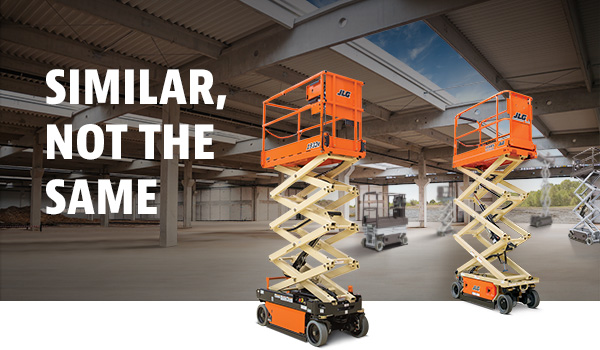
Similar, Not the Same


You can settle for a scissor that does the job. Or you can choose from two JLG® scissor lines that do what other brands can’t. Consider our full range of machines—from the value R to the premium ES—and get the performance you expect with smart, simple technology that maximizes your uptime.

Learn more:  https://www.jlg.com/en/destination/similar-not-same


6/27/23

Go Higher, Work Faster, Do More - JLG Lift Equipment from I-80 Forklift

.

You need to go higher. Work faster. Do more. Check out the lift equipment from JLG that will take you to new heights, helping you conquer those challenges with confidence. From the latest access lifts to services, parts and technical support, JLG makes sure you have what you need to get the job done.

JLG is a leading supplier of access equipment, including various man lifts, telehandlers and mobile elevating work platforms (MEWP)—formerly called aerial work platforms (AWP). An aerial work platform can help you reach tasks at height with enhanced safety and greater productivity, whether you need to access work at 8 ft or 185 

Learn more at: https://www.jlg.com/en/equipment

Find all your JLG Lift needs at: https://www.i-80forklift.com/

6/24/23

Hear This Rental Salesman Describe How the JLG® Rotating Telehandler Improves Productivity


Hear from Dave, rental salesman, as he describes how the remote boom control feature of the JLG® rotating telehandler increase productivity on the job site. It's Time to Revolve: www.rotatingtelehandlers.com

6/22/23

JLG Partners With Associated Builders and Contractors to Bring Innovation to the Industry


JLG is proud to be a strategic partner to Associated Builders and Contractors (ABC) that's helping to bring the newest technologies to construction companies throughout the U.S. By connecting with small- to medium-sized general contractors across the country, we can increase productivity and enhance safety on job sites by sharing machines built with the latest customer-inspired innovations. Explore more at http://www.jlg.com/

6/18/23

Need to Hoist Materials? Consider Using a Telehandler Instead of a Crane


For example, by switching out these tools, telehandlers can be used for more than just lifting applications — they excel at hoisting (and material handling) tasks too when equipped with a boom-mounted lifting lug attachment (also referred to as hooks or clevises). This type of attachment allows operators to put a chain or straps through it to efficiently handle suspended loads (aka hoist materials). 

Because they are purpose-built to move heavy objects with great maneuverability, using a telehandler for this type of material handling work is often more cost-effective than bringing in a crane. Let’s take a closer look at how…

What different considerations go into selecting a telehandler for hoisting or material handling versus lifting?

The most important thing to do before selecting a telehandler for hoisting or material handling is knowing two things: 1) what is the work that needs to be completed, and 2) where will that work be done. 

This starts with calculating the “maximum pick” that the machine will need to handle, which can be done in three steps: 

Identify the maximum weight of the load that needs to be lifted and handled (i.e. how heavy is the heaviest object/material that needs to be picked up). Make sure the telehandler has enough capacity to support all of the lifts.

Figure out the maximum angle the machine needs to be able to lift and place the load (i.e. what’s the furthest up, over and/or out that the telehandler needs to reach). It is important to know how much space is available on the job site for maneuvering and positioning the load. Depending on the site, trade-offs may need to be made when selecting a telehandler’s size versus its capacity. Space restrictions will influence not only the size of the telehandler but also the style. For example, if the machine needs to feed the material from a stationary position, similar to how a crane would perform on-site, a rotating telehandler should be considered. JLG® rotating telehandlers provide 360-degrees of rotation from one spot. To learn more, check out these resources: Rotating Telehandlers: A Unique Equipment Solution and Rotating Telehandlers Lift, Extend and Rotate.

Determine the maximum height that the load needs to be placed (i.e. how high does the load need to be lifted)

Armed with these measurements, users can then refer to machine load charts to guide them in selecting the appropriate telehandler. It is important to note that all telehandler attachments have their own load chart, which should always be referenced before use.

Once a model is chosen, it’s important to consider what attachments are needed to complete the work. Telehandlers are called “tool carriers” for a reason — they can handle a wide range of hoisting and material handling applications because of the large variety of attachments they can be equipped with, from buckets, carriages and truss booms/lift hooks to specialty attachments like tire handlers. 

Understanding the nature of the work to be accomplished and the capabilities of each type of attachment the machine can be fitted with is crucial to safe and efficient use. This means knowing whether a load needs to be picked or placed. Does the job require loose material to be scooped or a load suspended? Does the operator need to grapple loose material or pipes? Answering these questions will help owners/operators select the appropriate size and type of attachments needed.

The final step in selecting a telehandler is to know where the machine will be working and to understand what the job site conditions will be during operation. For example, will the machine be working on undeveloped surfaces like dirt or rocky soil, or on finished surfaces like turf or concrete? This information helps to determine what tires are needed on the machine — foam-filled/solid tires are great for undeveloped terrain, and non-marking tires or turf tires will be needed in developed areas to protect the ground.

Also, consider what options the machine should have to keep operators safe and productive during long hours in the cab. For instance, will he/she need an enclosed cab equipped with heat and air conditioning? Depending on the climate and the time of year, this choice is very important. Will he/she need to work before the sun comes up or after it goes down? If so, getting a model with work lights is necessary. When working in heavily congested areas, beacons should be considered.


6/15/23

Telehandlers Pick-and-Carry in Wind Industry Applications


Working at height is part of the job for wind-energy technicians, who spend much of their workday suspended hundreds of feet above the ground;  equally important is lifting and placing materials during the construction of the wind turbine structures.

For decades, JLG has designed and developed equipment dedicated to helping its customers enhance worksite productivity and safety for a variety of industries, including, fairly recently, the wind-energy industry.

Particularly for the wind industry, JLG offers its high-capacity telehandler line, which includes its JLG® 1644, 1732 and 2733 models, for picking and carrying heavy loads around a work site.

INDUSTRY APPLICATIONS

In general, telehandlers are used for lifting and placing materials. On a general construction site, the primary spec people are interested in a telehandler’s reach so they know how high they can lift and place a load. 


In the wind sector, height is also important — but, capacity is the primary spec as it determines how much a telehandler can pick and carry per load. JLG’s high-capacity telehandler line, which complements the company’s traditional telehandler line, is used in industries, such as wind, where operators frequently move very heavy objects.


For example, in wind-farm construction, if the operator wants to move one of the blades, or a piece of the tower, that’s where a high-capacity telehandler would be used. It might come on a truck. The telehandler then unloads it before moving it to the area where it’s needed.


Even though JLG began focusing on the wind industry in 2017 with the introduction of its high-capacity telehandler line, the company’s expertise with other industries laid the groundwork for success.


JLG’s high-capacity telehandler line was designed for the wind-energy and related markets, including oil and gas. You’re going to find the company’s traditional telehandlers on just about every job site where materials are lifted and placed. There was a market in wind for high-capacity telehandlers specifically. It’s a niche market for the brand.


And, you’ll find JLG MEWPs (mobile elevating work platforms), articulating and telescoping boom lifts; electric- and hydraulic-drive scissor lifts; portable personal vertical lifts; low-level access solutions; and telehandlers, in that market as well, doing maintenance on existing structures.


MORE THAN WIND

Although the wind industry has a history of its technicians working at height, JLG’s focus is not dedicated solely to the wind. Industries like oil and gas, steel erection, industrial construction and mining also present unique challenges to equipment operators. With a wide range of specialized attachments, JLG’s high-capacity telehandlers can adapt to demanding job sites and replace other traditional machines. Plus, their ability to handle heavy, bulky loads makes them ideal for performing maintenance on other machines in the equipment fleet. 

As the company continues to offer equipment solutions for working at height across the globe, it will continue to improve upon its product line in conjunction with the needs of these marketplaces.

And as far as the wind industry goes, JLG will keep working closely with that constantly growing market, keeping an eye on the wind industry to identify unmet needs and then innovating to evolve the brand’s equipment offerings to deliver solutions that meet those needs.

To learn more about JLG’s high-capacity telehandlers, click here.

6/12/23

I-80 In-House Trucking Service


I-80 Forklift In-house trucking service is Open for Service -California compliant and our RGN Cozad  35 ton air-tail trailer will provide fast and efficient loading and unloading.

  • We have the ability to transport 59,000 lbs.
  • Provide transportation anywhere within California
  • Available 7 days a week
  • Professional driver who is reliable and experienced
  • Pricing: $120.00-$130.00 per hour for RGN load