6/06/20

Forklift Safety Checklist

  
Forklifts should receive adequate safety checks . There are various hazards associated with forklift operation and a complete check before daily forklift operation will ensure forklift driver safety and safety for other employees and company assets.

A forklift safety checklist will ensure its safe condition. It will help you identify any potential problem with the forklift. Having a forklift safety checklist is essential.

A safety checklist should be completed with a "Yes or No" complete with a comment for "No" answers.

General information should be provided:

Name of workplace
  1.     Division/Department/Section
  2.     Running location
  3.     Identification of forklift
  4.     Work description (brief)
Workplace conditions
  1.     Is the operating area completely separated from walkers?
  2.     Are there clear and adequate safety signs warning walkers against forklift traffic?
  3.     Are walker pathways and zebra crossings marked?
  4.     Are workers warned about  crossing forklift pathways?
  5.     Are convex safety mirrors present at blind spots?   
Forklift part check
  1.     Does the forklift specification meet the operating requirement?
  2.     Is a clear forklift load chart provided?
  3.     Is a seat belt provided?
  4.     Is there a speed controller?
  5.     Do the horn, reversing beeper, proximity indicator and flashing light function properly?
  6.     Is there a protective structure provided on the forklift to prevent injuries during roll=overs or from falling objects?
  7.     Is the maintenance performed regularly?
  8.     Are forklift maintenance and repair records maintained?
  9.     Is there enough fuel inside forklift?
  10.     Is forklift battery charged?
  11.     Are the forklift tires fully inflated?
  12.     Are the tires pressure enough and safe?
  13.     Are the tires in good conditions?
  14.     Do the forklift brakes work?
  15.     Is the steering functioning correctly?
  16.     Does the gear shift work?
  17.     Are the left and right mirrors available and clear?
  18.     Do all indicators and gauges function properly?
  19.     Are there any liquid leaks from the forklift?
  20.     Are fuel, oil, hydraulic fluid and coolant levels full?
  21.     Is there a portable fire extinguisher fitted on the forklift?
  22.    Are hard hats required for forklift operators?
  23.    Is personal protective equipment such as eye goggles, ear plugs and safety shoes available to operators?
Forklift Operators/Drivers
  1.    Are  forklift operators or drivers certified?
  2.     Does the driver understand the load chart?
  3.     Is appropriate training provided?
  4.     Have forklift drivers been given adequate training?
  5.     Are the drivers familiar with the workplace layout in the plant site?
  6.     Do forklift drivers follow the pathways correctly?
  7.     Are forklift drivers or operators in good health?
  8.     Does the forklift driver know the maximum speed?
Working system
  1.     Are there speed limits for powered equipment on site?
  2.     Are there appropriate traffic management plans at the plant site to prevent collision of forklifts with people and other mobile equipment by separating them in time or space?
  3.     Are all safety procedures related to forklift inspection, operation, clean up and maintenance established, maintained and communicated to operators?
  4.     Is there a monitoring and supervision system for ensuring all safety procedures work?
  5.    Are work schedules adequate to move materials without operating the forklift at excessive speeds?
  6.     Are only certified drivers allowed to operate a forklift?
  7.     Is load checking always performed for load stability?
  8.     Is load weight always checked before loading to avoid overloading?
  9.     Is the load always lowered prior to the forklift being in motion?
  10.     Are safe distances provided  from the edge of ramps, docks, drains, gutters, floor openings and any other opening and obstacles established to prevent forklift accident?
  11.     Are all ramp or dock edges safeguarded and visibly marked?
  12.     Is the forklift allowed to lift workers using forklift to do certain job?
  13.     Is the forklift allowed to be used for doing other jobs instead of lifting?
  14.     Is the procedure for the safe battery charging or fuel filling established?
All these questions must be completed to ensure forklift safety.Countermeasures and follow up are required before the forklift can be used. Follow up must be made for NO' answers to any of these above questions in the safety checklist.

By Lukman Nulhakiem

Lukman Nulhakiem is a chemical engineer who has experience in hazard recognition and hazard control studies. Visit his blog at  cemicalplantsafety.net to learn more about safety in chemical plant and workplaces in general.


Article Source: http://EzineArticles.com/?expert=Lukman_Nulhakiem

Article Source: http://EzineArticles.com/5056035

6/03/20

Fall Arrest vs. Fall Restraints


Falls are one of the leading causes of injuries in the workplace. As you work to mitigate the dangers of falls in your facility by putting safe guards in place, keep the differences between arrest and restraint in mind: Fall arrest means to be caught while falling and fall restraint means to be restrained from falling in the first place.

5/31/20

Now Hiring - Technician


Mechanical experience in equipment or auto helpful Electrical and Hydraulic experience helpful

Ability to troubleshoot and read equipment manuals Physical stamina to handle a full shift of being active and working on equipment in the field

Clean DMV record

Pay: $20 – $30/hour – DOE with Benefits

Send resume to drew@i80forklift.com

5/28/20

JLG Compact Crawler Boom Hits Homerun at Camden Yards


The foul poles at Baltimore’s Camden Yards serve two functions. As transplants from the old Memorial Stadium, they bring more than three decades of prior history to the now 22-year-old baseball stadium. As vertical extensions of foul lines on the field they help umpires determine whether a fly ball is fair or foul during gameplay. For this reason, it is important that the poles are regularly painted and highly visible for day and night games. But the crisscross ironwork poles are 70 feet tall, which can present a challenge to those tasked with painting them.

Last year, Maryland Stadium Authority turned to Rentals Unlimited, Inc. in Clarksburg, Maryland, and the JLG® X700AJ Compact Crawler Boom for help. According to Jim Joyce, sales manager of the equipment and truck rental company and long-term JLG customer, painting the foul poles challenged his company to recommend a piece of equipment with a footprint small enough to fit on the ball field’s warning track and offer enough reach to access the top of the poles.

“Running a machine across the actual playing field was out of the question,” he said. “So, we measured the warning track and were confident the Compact Crawler Boom would easily fit on the track and provide access to the poles.”

Boom’s compact size meets challenge
With a width of just 3 feet 3 inches, a 440-pound platform capacity and non-marking tracks, the X700AJ proved to be the perfect choice for the ballpark application, enabling contractors to apply two coats of yellow paint top to bottom on each of the two poles.

“Everyone who saw the machine before we put it to work was surprised by its capabilities,” said Joyce. “I think it was the boom’s size that threw them. It weighs just 7,000 pounds, but extends to 70 feet, and it’s easy to operate.”

The compact size and vertical reach of the X700AJ has made it a profitable addition to the fleet at Rentals Unlimited. “The crawler is a unique piece of equipment. Its compact size means it’s easy to transport and once on the job site, it will go through 39-inch doorways and fit into other hard-to-reach areas. The machine is self-leveling, so if it’s on uneven ground, it will level itself. And, it’s able to climb up and down steps, with rubber tracks that won’t harm sensitive flooring or landscaping.”

In addition, the X700AJ is environmentally friendly with an optional Lithium-ion battery for cleaner, greener operation. Dual power onboard—gas or electric engines, accompanied by an electric AC motor—are standard to reduce noise and emissions in public spaces. Other features include a hydraulic jib for greater reach, rotation of platform and a zero-turn radius with counter rotation.

Versatility leads to interesting assignments
The versatility of the machine has taken Joyce and his company on some interesting assignments beyond the Camden Yards application. “We took it down a flight of steps and through some doors at a facility that housed an Olympic-size pool in the Washington, D.C., area,” he said. “Once inside, we drove the boom down inside the empty pool and used the leveling feature so we could safely position the machine on the sloped bottom of the pool. This provided access to the roof about 60 feet above the pool and enabled workers to replace several rusted roof panels.”

Joyce described another application in which the machine climbed a long flight of stairs and drove through a 42-inch door in a large medical facility. “And then there was the large retail store in Virginia. The Compact Crawler Boom was the only piece of equipment small enough to fit through the front doors and still offer enough reach to allow workers to wash the large windows positioned well above the doors. This machine just opens up a whole avenue of opportunities for the rental business, and its success seems to have a snowball effect.

“That’s the story here,” Joyce continues. “Expand your fleet with the purchase of a Compact Crawler Boom and open up new doors. And the great thing is, they don’t have to be big doors – just 39 inches and you can move right through them.”

5/25/20

Now Hiring - Sales


Energetic, outgoing, trustworthy and self-motivated

Excellent communication skills

2 years experience with inside or outside sales

Ability to promote and sell equipment and services to existing and prospective customers

Ability to obtain customer leads through cold calling

Sales experience in the construction field helpful

Salary, Benefits, and Commission – DOE

Send resume to rick@i80forklift.com

5/22/20

Commonly Used Fork Lift Attachments


Commonly used fork lift attachments typically include a wide variety of attachments that serve a wide variety of purposes. This article will discuss a few of the more common examples which include side shifters, carton clamps, slip sheet attachments, multipurpose clamps, carpet poles, fork conditioners, roll clamps, and many more. Once you have finished this article you will have a thorough knowledge of each of these add-on parts.

The side shifter is one of the more commonly used fork lift attachments and it is a hydraulic attachment that allows for the lateral movement of the forks and backrest. This way the operator may place a load without having to move the truck in many cases. There is also the rotator which aids in the handling of tilted skids and special needs for the handling of certain materials. As the name suggests, it allows the tines to be rotated, which can also make dumping containers easier as well.

If you are someone who is constantly loading and unloading cargo of various sizes, then an automatic fork positioner may be one of the used fork lift attachments you have been waiting for. It is a hydraulic attachment that moves the tines together and apart without the operator having to constantly get in and out of the truck to reposition them manually.

Another one of the more useful attachments you may want to consider when looking for used fork lift attachments is the roll and barrel clip attachment. This piece of machinery is made to squeeze any material you are carrying, such as a barrel or paper roll, to make it easier to carry. Sometimes it is paired with a rotator as well, which can be used for a variety of purposes, such as to insert vertically stacked rolls of paper into the horizontal feed of a printing press.

Poles are also used fork lift attachments that are most often found in environments such as carpet warehouses. They can be used instead of forks to pick up and move large rolls of carpet quickly and efficiently. The clamp attachment is used to open and close around an object the operator is carrying which squeezes to pick it up.

It is most often used for the transportation of boxes, cartons and bales. The slip sheet attachment acts in a similar fashion except it uses a slip sheet to load off the forks. The drum handler attachment, as the name suggests, is used for the loading and unloading of drums by using a spring loaded jaw that grips the top of them.

These are just a few examples of the many different optional attachments that you will run into when looking at various used forklift attachments [http://www.usedforkliftguide.com/used-fork-lift-attachments.html]. The better you can understand the different attachments that are available, the easier your job will become as you can find the perfect attachment to help you move many different types of objects.

Pieter West travels the world on a regular basis and have written about numerous subjects. He has an extensive knowledge about, finances, DIY, parenting advice and many more subjects. You can find more of Pieter's articles regarding used forklifts at [http://www.usedforkliftguide.com/]

 By: Pieter West

Article Source: http://EzineArticles.com/expert/Pieter_West/369866

Article Source: http://EzineArticles.com/3035603

5/19/20

Safe Use Standard


 ANSI A92.22 & CSA B354.7

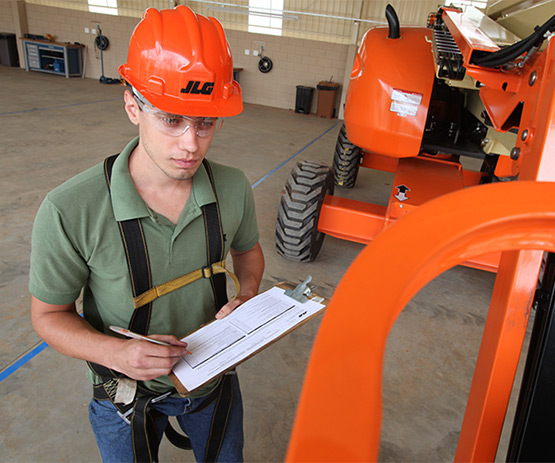
This standard governs the safe use of MEWPs by specifying proper application, inspection, training, maintenance, repair and safe operation. One of the main requirements is developing a safe use program to guide MEWP use as it relates to job site safety.

Whats Changed

Step 1:
To develop an effective safe use program that complies with new requirements, it’s important to perform a site risk assessment before starting a job. This assessment should:
  • Define the task, location and timing of the work
  • Inform MEWP selection
  • Evaluate MEWP-related, job-specific and additional risks
  • Identify controls like proper training and rescue planning

Step 2: Once a safety plan has been developed, it should be shared with everyone who will be on site during the work. The updated standards outline new requirements for many roles as they relate to a safe use program.
  • Operator: Is trained and authorized to operate the MEWP
  • Occupant: Has knowledge of MEWP use and safety, including fall protection systems
  • Supervisor: Monitors use of MEWP to ensure safety plan is followed
  • Technician: Performs MEWP maintenance in line with manufacturer’s requirements
Learn more at:  https://www.jlg.com/en/destination/ansi/safe-use