7/02/18

NEW GENIE ® LIFT GUARD™ CONTACT ALARM PROTOTYPE FOR SLAB SCISSOR AND VERTICAL MAST LIFTS

 Shown During OSHA National Stand Down Week

New system alerts operators, occupants and ground personal
 to potential hazards when working at heights
 Genie® protective solutions continue to evolve. Highlighting a new generation in innovative solutions, a prototype of the new Genie Lift Guard™ Contact Alarm system for Genie GS™ scissor lifts and Genie GR™, GRC™ and QS™ vertical masts shown to Genie customers during Vertikal Days at Donington Park in Leicestershire, United Kingdom, May 16-17 on stand n°110. 

This system is an electronic secondary guarding solution designed to activate when an obstruction makes contact with an activation whisker mounted on the lift’s platform guardrails, alerting the operator, occupants and ground personnel of a potential hazard.

“Operator safety and productivity are key considerations in the Genie design process,” says Zach Gilmor, Genie Product Manager, Terex AWP, for the Europe, Middle East, Africa and Russia region (EMEAR). “The Genie Lift Guard Contact Alarm system for slab scissor and vertical mast lifts is designed to supplement a trained operator’s situational awareness and provide a secondary layer of guarding while working at height. Showing this prototype to customers during Vertikal Days gives us the opportunity to engage with Genie customers and end users, gaining feedback from them so we can tailor our future protective solution offerings to best meet their needs and expectations.” 

According to Gilmor, the standard configuration for the Genie Lift Guard Contact Alarm system for slab scissor and vertical mast lifts will include two activation whiskers — one mounted on the front of the platform, and one mounted on the rear.

How will it work?

The Genie Lift Guard Contact Alarm system for slab scissor and vertical mast lifts is designed to activate when an activation whisker is deflected by an obstruction, triggering the limit switch in the base of the assembly. When the system is activated, all machine motion will stop, an alarm will sound and beacons will flash. The operator will be able to continue driving or elevating the platform into the desired working position after acknowledging the activation system and machine stopped condition. According to Gilmor, a free-movement zone will exist between the activation whisker and guardrail, to allow mobility for operators and occupants after the system is activated.

Why this design?

“Genie customers throughout the world are committed to workplace safety, and we want to support their efforts with focused market solutions.  We designed the Genie Lift Guard Contact Alarm system for slab scissor lifts and vertical masts to provide a level of secondary guarding equivalent to that available on boom lifts, in a package that meets the unique needs of scissor and vertical mast lift applications,” says Zach Gilmor.

The Genie Lift Guard Contact Alarm system for slab scissor lifts and vertical mast lifts will go into production in late 2018. A retrofit kit will be available at time of production to allow for compatibility with Genie Smart Link™ system-enabled scissor lifts and vertical masts produced from 2011-2018.

“La sicurezza dell’operatore e l’efficienza del suo lavoro sono considerazioni chiave nel processo di progettazione di Genie”, dice Zach Gilmor, Responsabile di Prodotto Genie, Terex AWP, per Europa, Medio Oriente, Africa e Russia (EMEAR). “Il Sistema Allarme a Contatto Genie Lift Guard per le piattaforme a forbice e per quelle a colonna verticale è stato progettato come complemento per aiutare un operatore adeguatamente formato ad essere consapevole dei rischi posti dall’ambiente che lo circonda e per fornirgli un livello di protezione supplementare mentre lavora in quota. Mostrare questo prototipo durante i Vertikal Days ci dà l’opportunità di coinvolgere i clienti Genie e gli utenti finali, di avere i loro commenti così da adattare su misura le nostre future soluzioni per la protezione per soddisfare al meglio le loro necessità ed aspettative.”

Secondo Gilmor, la configurazione standard per l’Allarme a Contatto Genie Lift Guard per le piattaforme a forbice ed a colonna verticale includerà due antenne di attivazione – una montata sulla parte anteriore della piattaforma ed una sul retro.

Come funzionerà?

Il Sistema di Allarme a Contatto Genie Lift Guard per le piattaforme a forbice ed a colonna verticale è stato progettato per attivarsi quando un’antenna di attivazione viene piegata da un ostacolo, attivando così l’interruttore di controllo posto alla base del sistema. Quando il sistema è attivato, tutti i movimenti della macchina vengono fermati, un allarme sonoro e uno luminoso entrano in funzione. L’operatore potrà tornare a guidare o sollevare la piattaforma nella posizione di lavoro desiderata dopo aver reagito all’attivazione del Sistema e al blocco delle funzioni della macchina, mettendo in funzione alcuni comandi. Secondo Gilmor, esiste una zona libera tra il cavo di attivazione e il parapetto, che consente mobilità all’operatore e alle persone in cesta dopo che il sistema è stato attivato.

Perchè questo progetto?

“I clienti Genie in tutto il mondo si impegnano a rendere i propri cantieri dei luoghi di lavoro sicuri, e noi vogliamo sostenere i loro sforzi offrendo soluzioni di mercato mirate. Abbiamo progettato il sistema Allarme a Contatto per piattaforme a forbice e a colonna verticale per garantire un livello di protezione secondaria equivalente a quanto già disponibile per le piattaforme a braccio, con una configurazione che risponde alle necessità delle applicazioni con piattaforme a forbice e a colonna”, dice Zach Gilmor.

Il Sistema Allarme a Contatto Genie Lift Guard per piattaforme a forbice ed a colonna verticale entrerà in produzione alla fine del 2018. Allo stesso tempo sarà disponibile un kit di retrofit compatibile con le piattaforme a forbice ed a colonna verticale dotate del sistema Genie Smart Link™, prodotte tra il 2011 e il 2018.

genie_logo-low3
Terex Corporation is a global manufacturer of lifting and material processing products and services delivering lifecycle solutions that maximize customer return on investment. Major Terex brands include Terex, Genie, Powerscreen and Demag. Terex solutions serve a broad range of industries, including construction, infrastructure, manufacturing, shipping, transportation, refining, energy, utilities, quarrying and mining. Terex offers financial products and services to assist in the acquisition of Terex equipment through Terex Financial Services.

6/29/18

Thank You for Attending The Rental Show 2018


ARA Board Chair Mark Gilbertson thanks you for attending The Rental Show 2018 in New Orleans! We hope to see you next year in Anaheim!

6/23/18

A Safer Way to Maintain Your Machines

 JLG® Safety Props & Boom Stands

Are there any machines in your fleet that require maintenance soon? June is National Safety Month, and we want to help you safely complete necessary maintenance on your machines with our safety props and boom stands. We offer AWP service boom stands, electric scissor lift maintenance safety props and telehandler boom props to help keep you safe.

Get Catalog 

 
Please contact your Regional Service Manager or a JLG® service representative if further information is required.

Still need tech support? Visit our Call Center or call 877-JLG-LIFT (554-5438).

6/20/18

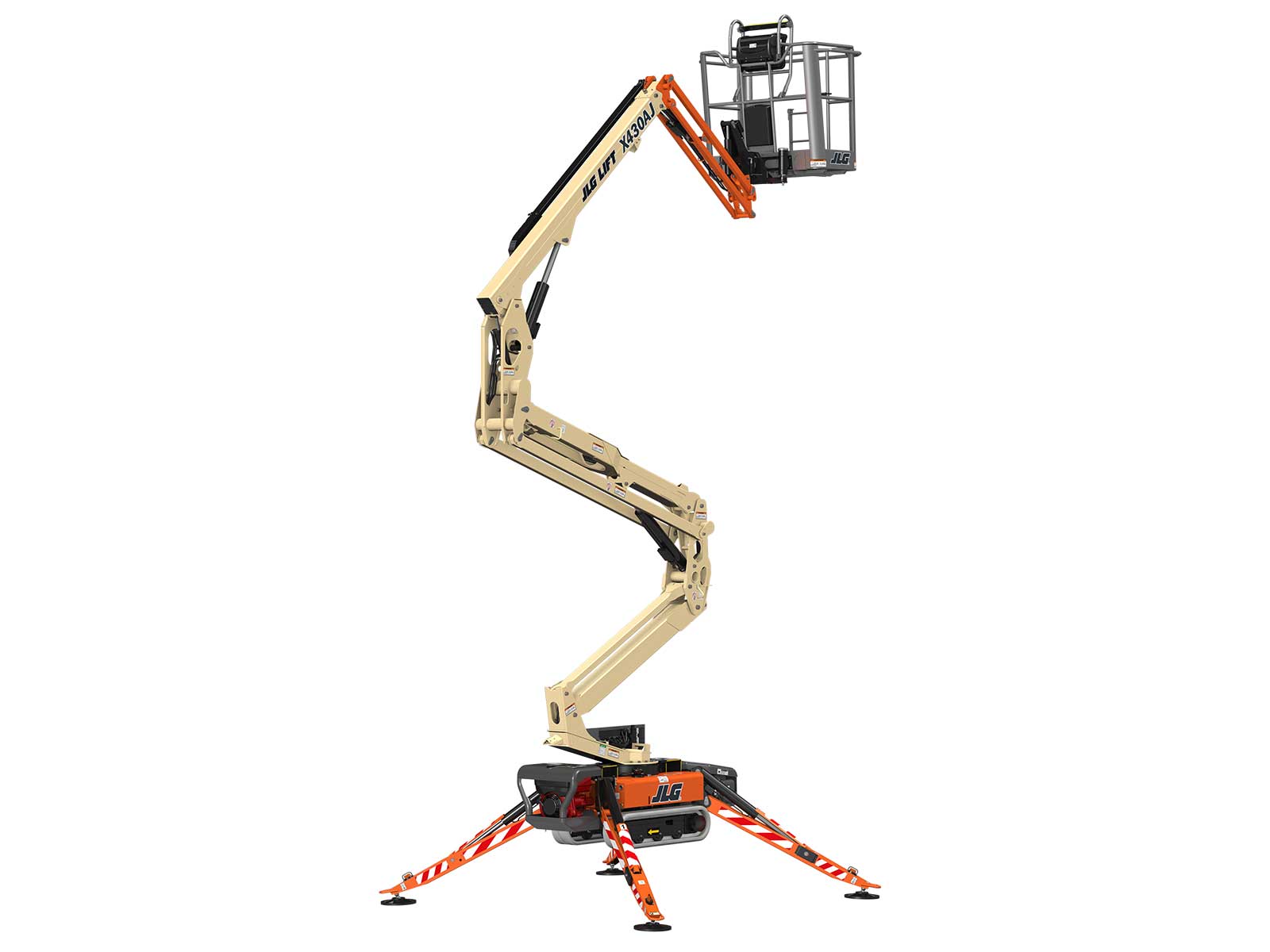
X430AJ Compact Crawler Boom


Key Specs

    Machine Width: 2 ft 5 in. / 0.74 m
    Platform Capacity: 500 lb / 226.80 kg

Key Features

    Best in Class - Outstanding horizontal reach with a 500 lb unrestricted platform capacity
    Quiet, Clean Operation - Lithium-ion 2.0 power system is eco-friendly without sacrificing performance
    Easy to Transport - Easily lifted by a forklift or crane thanks to forklift pockets and lifting eyes

6/17/18

Service Tips: Mobile elevating work platforms

Maintenance can drive lower total  cost of ownership.

 ANSI requires extensive recordkeeping of boom lift maintenance

By Bill Dovey

ANSI requires extensive recordkeeping of boom lift maintenance

New ANSI standards will require changes to maintenance recordkeeping.

Keep it clean
Keep it clean. Be diligent in keeping contaminants out of engine, coolant, electrical hydraulic systems and drives.

Proper maintenance of access equipment allows owners to sell and rent a safe fleet of machines and is critical to performance and uptime. Failure to properly maintain boom, scissor and vertical lifts can disrupt a project schedule and put it over budget.

Regular service of aerial work platforms (AWPs), now referred to by the American National Standards Institute (ANSI) as mobile elevating work platforms (MEWPs), is necessary to ensure compliance, prevent workplace accidents and lower total cost of ownership. Beyond the inspection checklist, here are items to consider when inspecting and maintaining aerial lifts.

ANSI standards define  inspection protocols
ANSI A92.6 outlines the frequency of preventive and annual MEWP inspection requirements. Federal law requires a frequency inspection every 90 days or 150 hours, whichever comes first. An annual inspection must be performed on a MEWP no later than 13 months from the date of the prior annual inspection. Owners should consider placing MEWPs on a planned maintenance schedule based on hours of operation and type of application.

ANSI also mandates inspections be performed by a technician qualified on the specific make and model of the MEWP or one having similar design characteristics. What’s required for inspections is determined by the original equipment manufacturer (OEM). Owners of mixed fleets must reference the manual of each manufacturer for the specific piece of equipment being inspected to ensure compliance and operator safety.

Cleanliness extends service life
Dirt and foreign materials that collect on a MEWP can shorten its service life and impact resale value. Although manufacturers provide safeguards such as shields, covers, seals and filters to keep air, fuel, oil and grease supplies clean, regular maintenance is still necessary.

Openings in air, fuel or oil lines that are disconnected during maintenance should be covered to prevent dirt or other foreign materials from entering. When replacing old or damaged parts, such as oil and air filters, keep the new parts in their containers to maintain cleanliness and avoid scratching or scoring.

Prevent hydraulic system contamination
Hydraulic system fluid cleanliness is key to a long life for the system and its components. Even a small amount of dirt or other contaminant can compromise the hydraulic system. Contamination can be caused by using inadequate hydraulic oil or allowing moisture, grease, filings, sealing components or sand to enter while performing maintenance. Insufficient warm-up or leaks in suction lines can cavitate pumps and cause contamination. A tainted system can damage close-fitting parts like valves, pumps and motors, leading to malfunctions that could result in faulty operation and shorter service life.

To assess hydraulic oil cleanliness, remove filters and look for cloudy oil or metal particles. If the hydraulic system has been contaminated, it must be drained, flushed and refilled with clean hydraulic oil. The MEWP’s service manual will share how often filters should be checked, cleaned and replaced. Filters may need to be inspected more often if the machine is operating in a harsh environment.

Extending powertrain life
Many diesel engines require using diesel exhaust fluid (DEF). If the wrong fluid is added, such as screen washer or diesel fuel, the injection, ejection fluid quality sensing systems may be damaged, impacting system life.

While battery packs are unlikely to become contaminated with foreign material, they may be subject to corrosion. To clean the battery, use a non-metallic brush and a solution of baking soda and water, then rinse with clean water and thoroughly dry it. Coat the terminals with an anti-corrosion compound.

New ANSI standards compliance
ANSI A92 updates are expected to be published in May 2018 and rental companies, dealers and distributors must be in compliance within one year of its publication date.

Rental companies will be required to train technicians on the current standards for each class of equipment they service. Equipment dealers and rental companies should also help operators understand and plan for these changes. End users may face challenges with new equipment and will have questions about site training and compliance.

The new standard requires annual machine inspections (AMI); completion and expiration dates must be noted on the MEWP. If rental firms use a third party for machine inspections and maintenance beyond daily walk-arounds, they must verify that person follows the new standard.

Under the new standard, operators with suitable experience may complete self-familiarization to reduce service calls to owners for minor operational adjustments. The requirement still exists to offer familiarization, but will be on an as-requested basis. In response to this change, rental companies may choose to use alternative customer service practices.

Another way rental companies can be more efficient is by stocking commonly used parts, attachments and supplies, eliminating rush orders and saving time and money.

Several changes to the manufacturing standards of MEWPs are anticipated, including load- and tilt-sensing, wind-force requirements, entrance gates, platform railings, tires and machine markings. Many OEMs have already undertaken these functional changes; operation manuals will include these updates.

New machinery components must be supplied by the OEM and meet the OEM specs to remain compliant. For example, replacing a gate with a chain on a new machine is an unauthorized product modification and will render the machine non-compliant.

Rental companies may see an increase in requests for information on retrofit accessories and must explain the manufacturer’s new warnings and instructions to renters. Rental companies should assist end users in meeting these new obligations. Equipment owners and dealers will need to consider how to familiarize their technicians with the new features brought on by the design requirements.

Regular MEWP inspections, preventive maintenance and ongoing training will improve operator and worker safety and increase uptime of equipment fleets. Partner with OEMs to understand best practices and develop a plan for optimal fleet utilization, which will help lower total cost of ownership.

Bill Dovey is senior product manager at JLG Industries Inc.

This article originally appeared in the May-June 2018 issue of Pro Contractor Rentals magazine, © 2018 Direct Business Media

6/14/18

Genie machine vs scaffold : Lighting maintenance work


Genie machines’ superior features provide better solution in reaching greater heights whilst they are proven to be safe, more productive and easy to use